Rekeying is changing the key a lock accepts while leaving the lock itself in place. Inside every cylinder is a row of pins; a new set of pins means a new key, and every old key becomes a piece of metal. Minutes per lock, done at your door.
New house, lost key, old tenant, ex-partner, the cleaner who no longer comes: those are rekey calls.
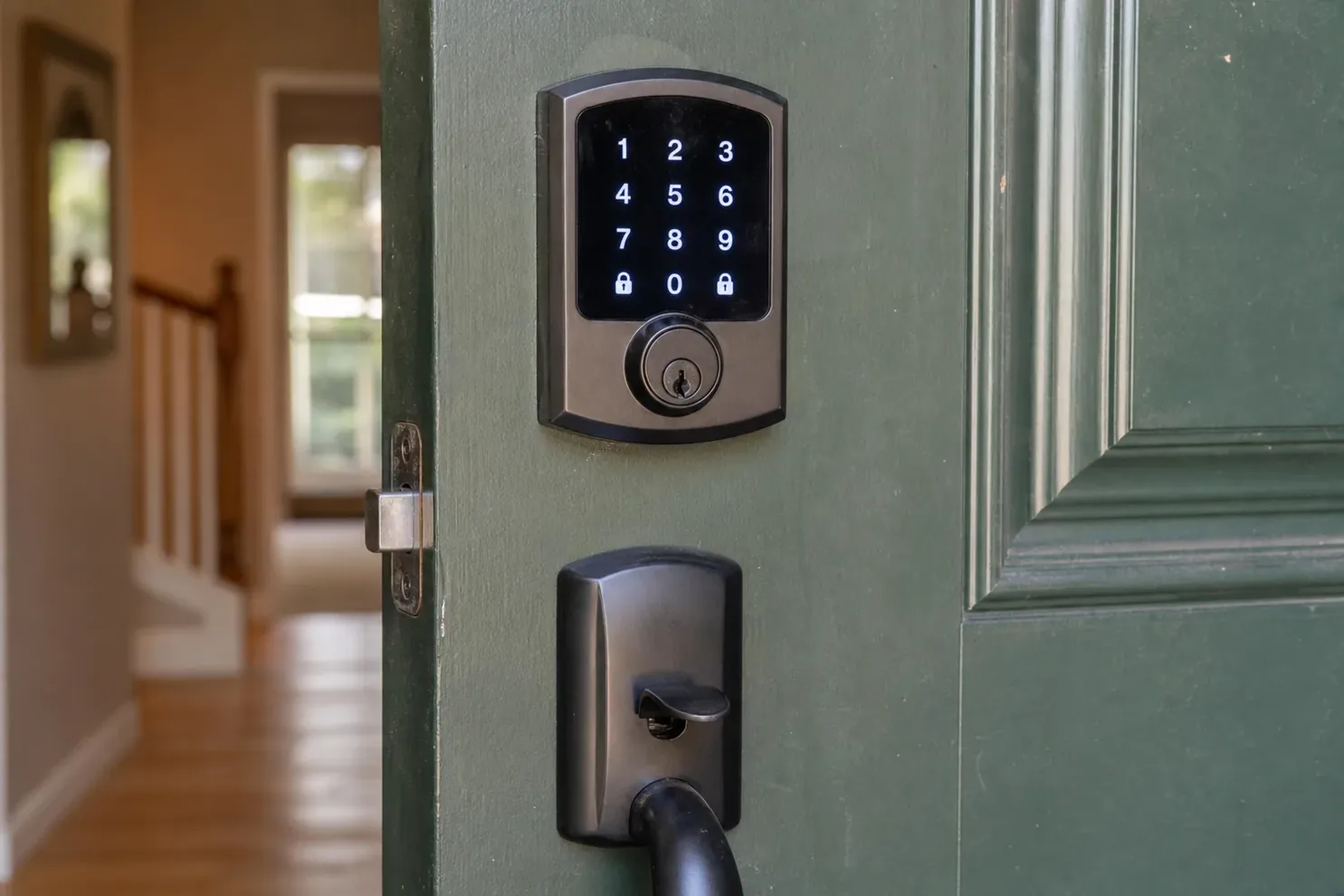
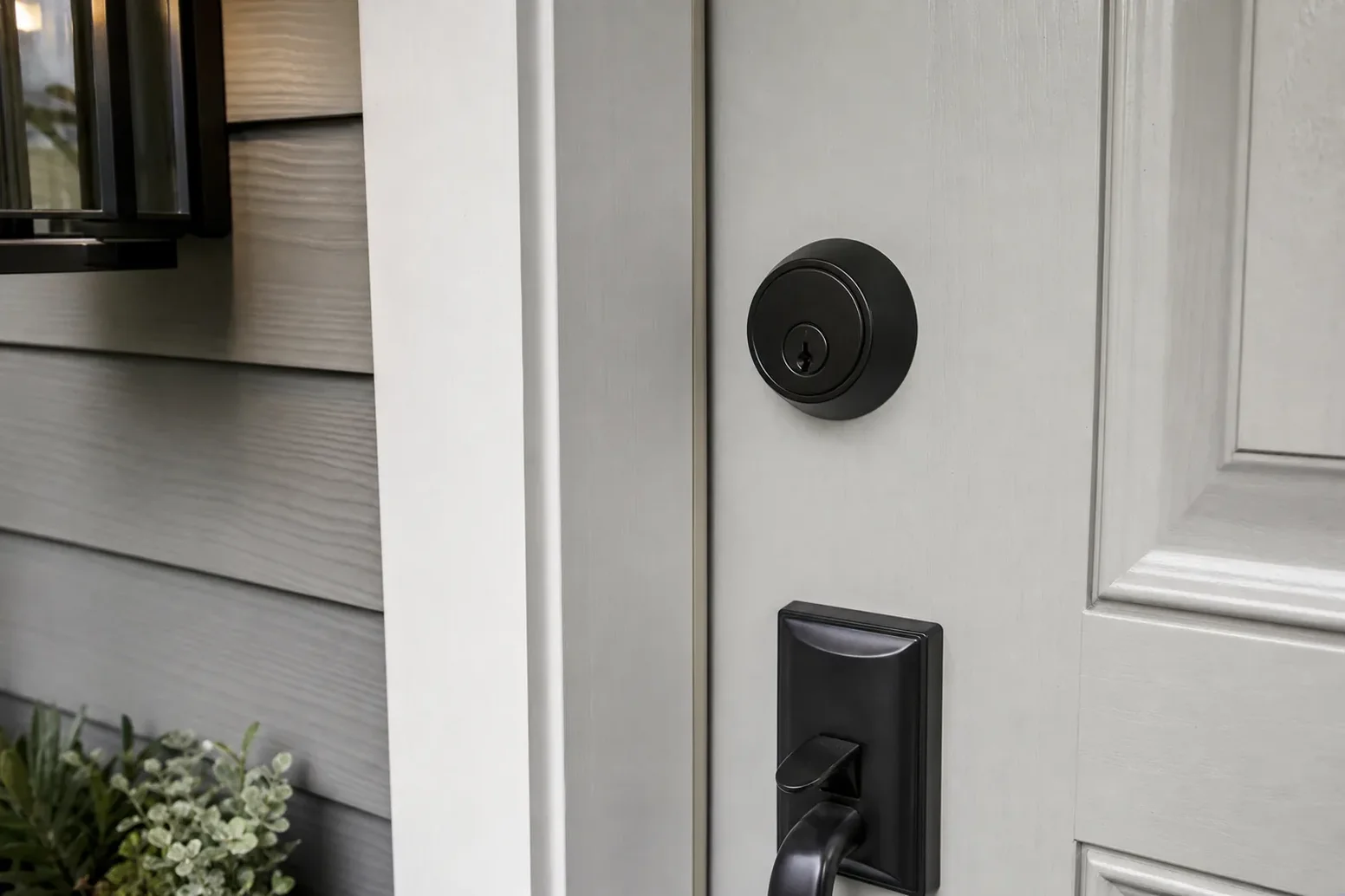
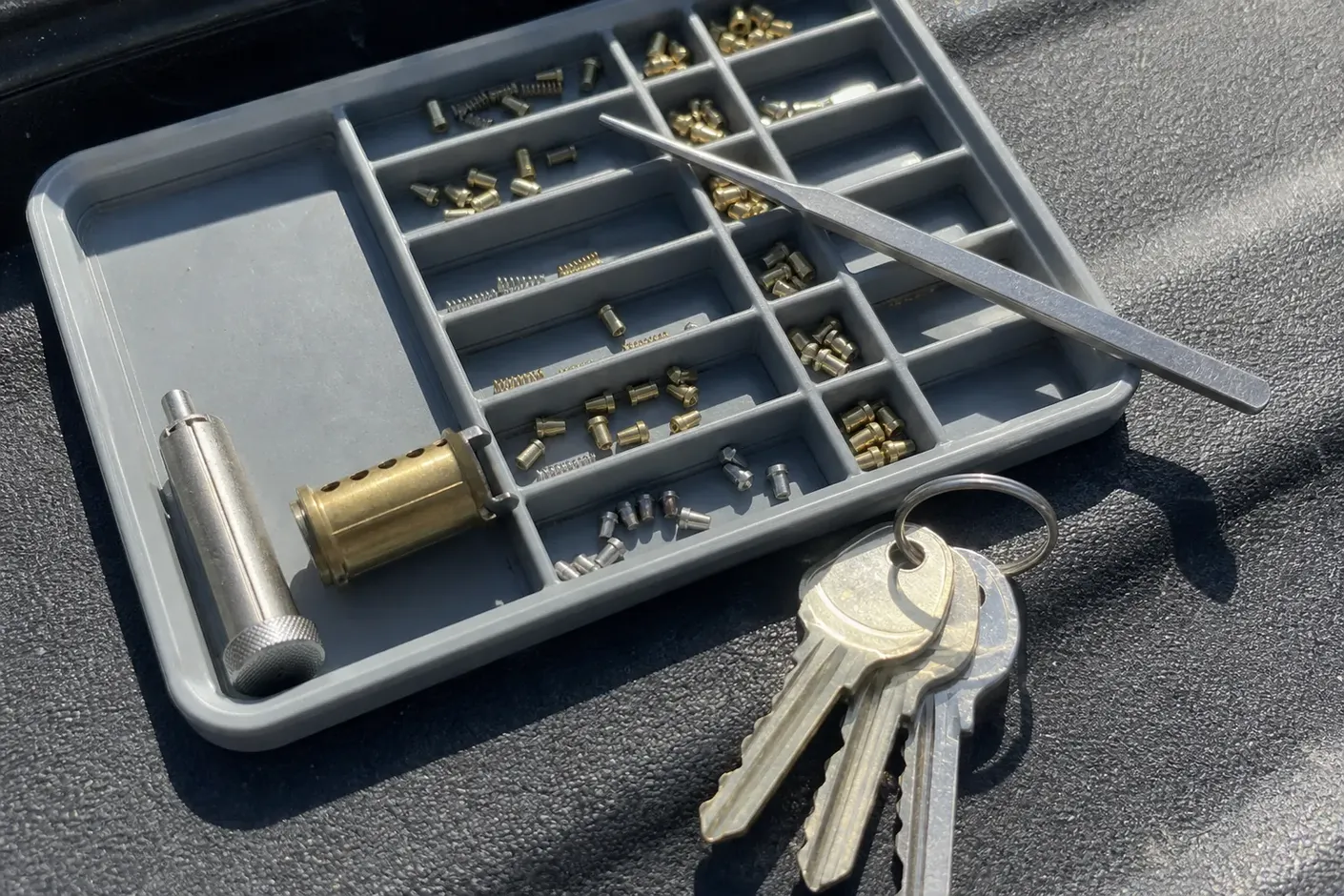
A lock change removes the hardware and installs new. That's for locks that are failing (stiff, loose, corroded, forced in the past) or the wrong kind for the door (a knob where a deadbolt belongs), and for upgrades like keypads and heavier grades.
Ask one thing: is the hardware sound? If yes, rekey. If no, replace.
The technician checks each lock. Sound hardware is rekeyed; failing or flimsy hardware is replaced. The typical outcome in Toms River is a new deadbolt on the front, rekeyed locks everywhere else, and a single key for the lot.
One key for the whole house is normal, brand mix included; exceptions are rare and named up front.
Moving in is the classic rekey. The old owners' keys, the agent's lockbox key, the relative's spare: all dead after one visit. Check the garage door into the house at the same time; it's the door people forget and the one that matters.
Between tenants a rekey is standard practice and takes minutes per door.
Proof that the locks are yours to change comes first. Then the work, door by door, rekeying or replacing as agreed. New keys are cut on site, and the technician checks every door closes and locks cleanly before leaving.
Under an hour for most homes; longer for a building with many doors or a master key system.
Rekeying is a stopgap. It's as permanent as the lock. One key per brand. Most brands key alike. Replacement is always the secure choice. Grade decides that, not age. Lost a key, so replace everything. Rekey everything instead; same result, less time.
Usually. Rare exceptions get named before any work.
Short. Most houses are done inside an hour.
Always. It's the check that makes sure the person changing the locks is allowed to.
Rekey, and replace any lock that was damaged. One visit covers both.
We do, routinely. It's the single most useful upgrade on most doors.
Tell us your street and we send a tech.