Every exterior door in one trip.
Front, back, garage entry, slider and any storage room, and whether they should all take one key.
Closing papers, a lease, or an ID with the shore address, checked before any lock work.
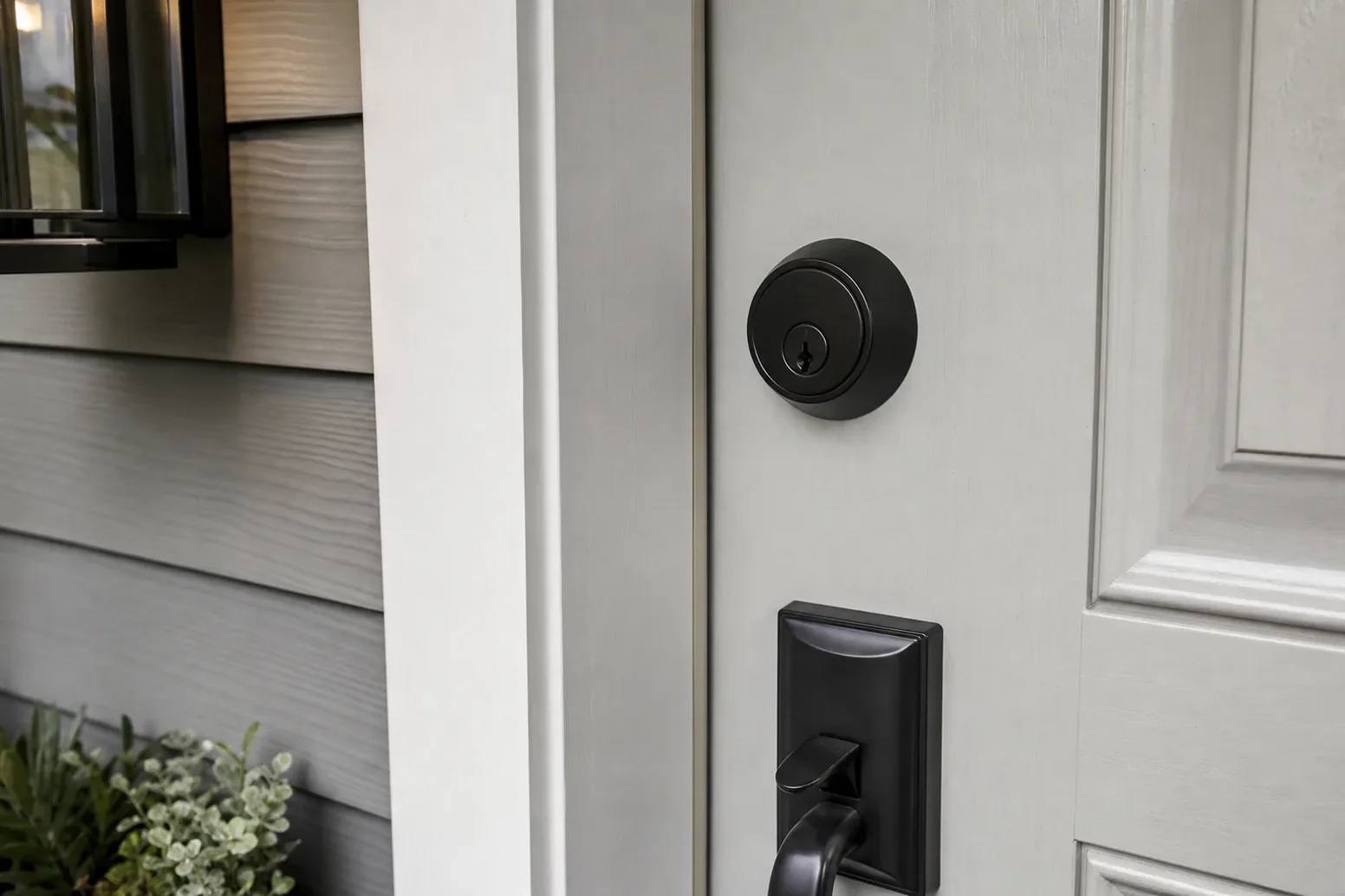
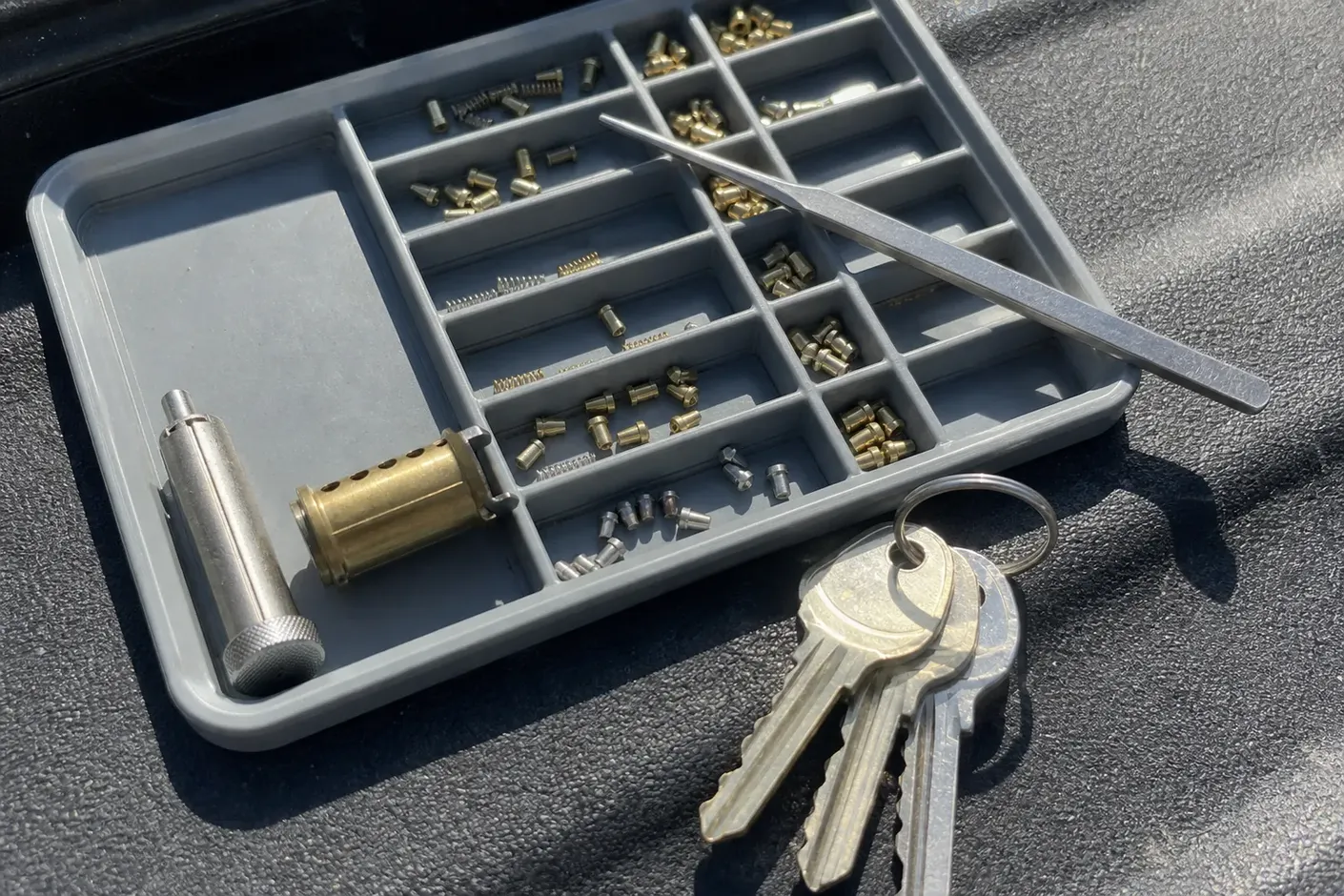
Each cylinder is reset to a new key, and the old key is tried to prove it's dead.
As many copies as you need, including one for the property manager.
You pick the doors; the estimate for them is free.
After years of renting, a shore house has handed out keys to cleaners, contractors, guests and relatives, and nobody kept count. Rekeying every outside door when you buy, or at the end of a rental season, is how you know every working key is one you handed out.
Collect every key you were given at closing, including the ones from the rental lockbox, the garage keypad code if there is one, and any keys labeled for sheds or outdoor closets. Walk the house and list every door that locks: front, back, garage entry, slider, and anything at ground level under a raised house.
Houses on the barrier island and near the bay take more salt air than anything inland, and a lock that has been rusting quietly for years may not be worth rekeying. You'll hear which locks can take new keys and which should be replaced, door by door, before anything is done.
The adult communities around town have their own pattern: a home lived in by one owner for decades, with keys handed to aides, family and neighbors over the years. Rekeying when the house changes hands, or when the people helping out change, keeps it simple to know who can come in.
The visit leaves you with every lock on a new key, the old keys shown to be useless, spares for the people who need them, and, if you rent the house out, a plain plan for resetting codes or keys at the end of each season.
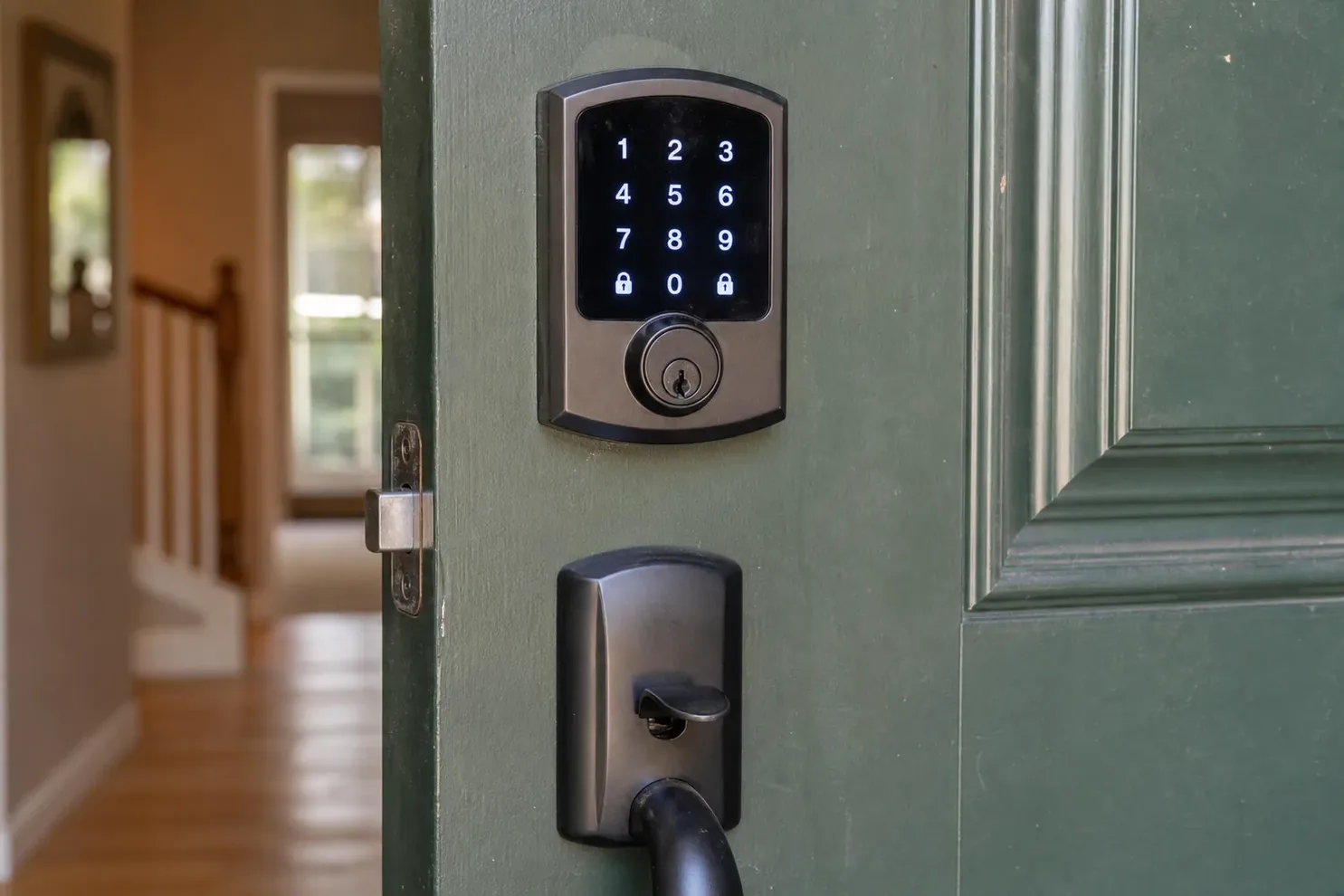
A keypad lock suits a house that's rented or empty half the year: codes can be changed between guests, and nobody needs a key under the mat. A keypad struggles on a door that drags, so the latch and strike get tuned before the lock goes on, and you choose the codes with the technician.
Salt air shortens battery and keypad life near the water, so choose one that still takes a key, and put fresh batteries in every spring.
Rekeying is enough when the locks work well. Salt-damaged or loose locks are better replaced.
Often, if the locks take the same key blank. That's checked door by door.
Closing papers, a lease, or ID with this address, before the work begins.
Yes. Codes are reset and the backup key cylinder is rekeyed on the same visit.
Yes. Homes, garages and sliders are all done in one visit.
Then there's no telling how many keys are out there. Every exterior door, the garage entry and any storage room is rekeyed so only your new keys work.
Often, if it takes a standard cylinder or padlock. Then one key does everything.
Not for the locks themselves. Doors at the top of a long stair do take a beating from the wind, so the latch and strike are checked while we're there.
Before you move anything in, if you can. Rekeying an empty house is quick, and nothing of yours ever sits behind a door someone else can open.
Usually. Many rental managers prefer keypads because codes can be changed between guests; check with them before choosing a model.
Usually, yes, if its lock takes the same key blank as the others.
Yes, and you'll have it before anything comes apart.
Tell us your street and we send a tech.