It happens at every marina on the bay: the key ring rides in a pocket, somebody leans over to grab a line, and the keys go into the water. A key that sinks in the bay is gone, and a fob that spent time in salt water rarely comes back to life.
The car is usually sitting in the marina lot or at the launch ramp with the trailer still hitched. A new key can be made right there, so the car and the trailer stay put. Give the name of the marina or the launch when you phone, and mention the trailer so the technician knows what to look for.
The state park beaches at the south end of the barrier island are a long drive from the nearest town, and a key lost on the sand there means a long wait if a tow truck has to come and go. Making the key at the car is the shorter path.
Give the parking area and the nearest bathhouse or beach entrance, and stay somewhere with shade and water while you wait. If your phone battery is low, say so early in the call.
Plenty of people leave the car at a park-and-ride and take the commuter bus into the city. When the key stays behind on the bus or at the office, the car is sitting in a lot two hours away from the key. The key can be replaced at the car that same evening, and the lost one deleted from the car's memory, so a stranger who finds it can't drive off.
Visitors from Pennsylvania, New York and North Jersey arrive in cars registered back home, which is no obstacle: any state's registration is fine alongside a photo ID that matches it. A rental car is different. Phone the rental company first, since many have their own rules for lost keys, and some will send a spare or ask you to use a particular service.
Families who own a shore house sometimes keep a spare car key in a kitchen drawer there. If someone can get into the house and bring it to the car, that may be the quickest answer of all; if not, a new key can still be made where the car sits, and the spare stays a spare.
Go to the dealer when the key or the ignition is still covered by a warranty or an open recall, or when the car is one of the few late-model vehicles whose keys can only be added through the maker's own system. That group is small, and it's identified during the first call so nobody drives out to a car that needs the dealer.
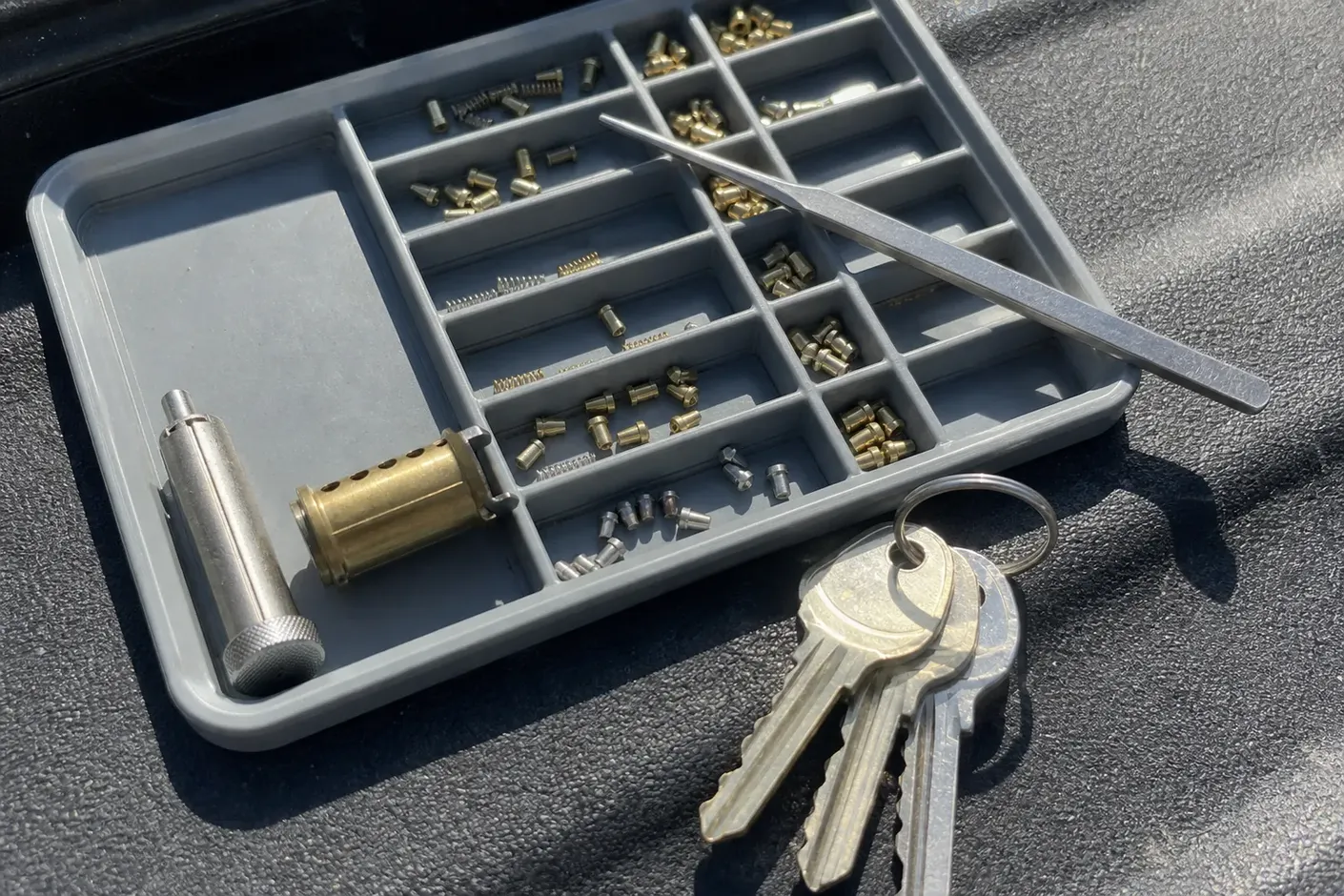
After checking your ID against the registration, the technician cuts the key to the car's factory code rather than copying a worn original, then programs the chip or the fob so the car accepts it. Then it's tested: every door, the trunk and the ignition, with you standing there.
If you still have a spare at home, mention it. It doesn't change how the key is made, but it can change whether you need one key or two.
Have your photo ID and the registration with you, plus the car's model year, make and model. Know where the car is: the marina and dock, the parking area, the street, or the row in the commuter lot. You get a free estimate on the phone, confirmed at the car before any blade is cut.
Yes. Everything happens at the car, whether it's in the marina lot or up at the ramp.
No. The trailer stays where it is; just mention it so the car is easy to spot.
Give the parking area and the nearest bathhouse, and wait somewhere with shade.
A new key can be made at the car in the commuter lot, and the lost one removed from the car's memory.
That's fine. Your photo ID and the registration are what matter.
The rental company. Many have their own rules for lost keys.
Yes. It's free, and you hear it first.
Tell us your street and we send a tech.