A house that rents by the week can see a new set of guests every Saturday from June to Labor Day. With metal keys, that means a lockbox, keys that go home in someone's beach bag, and a rekey every time a set disappears. With a keypad, each stay gets its own code, and the code simply stops working when the stay ends.
The same goes for the cleaners who turn the house over between guests, the property manager, and the relative who checks on things in January. Everyone gets a code of their own, and any one of them can be removed without touching the rest.
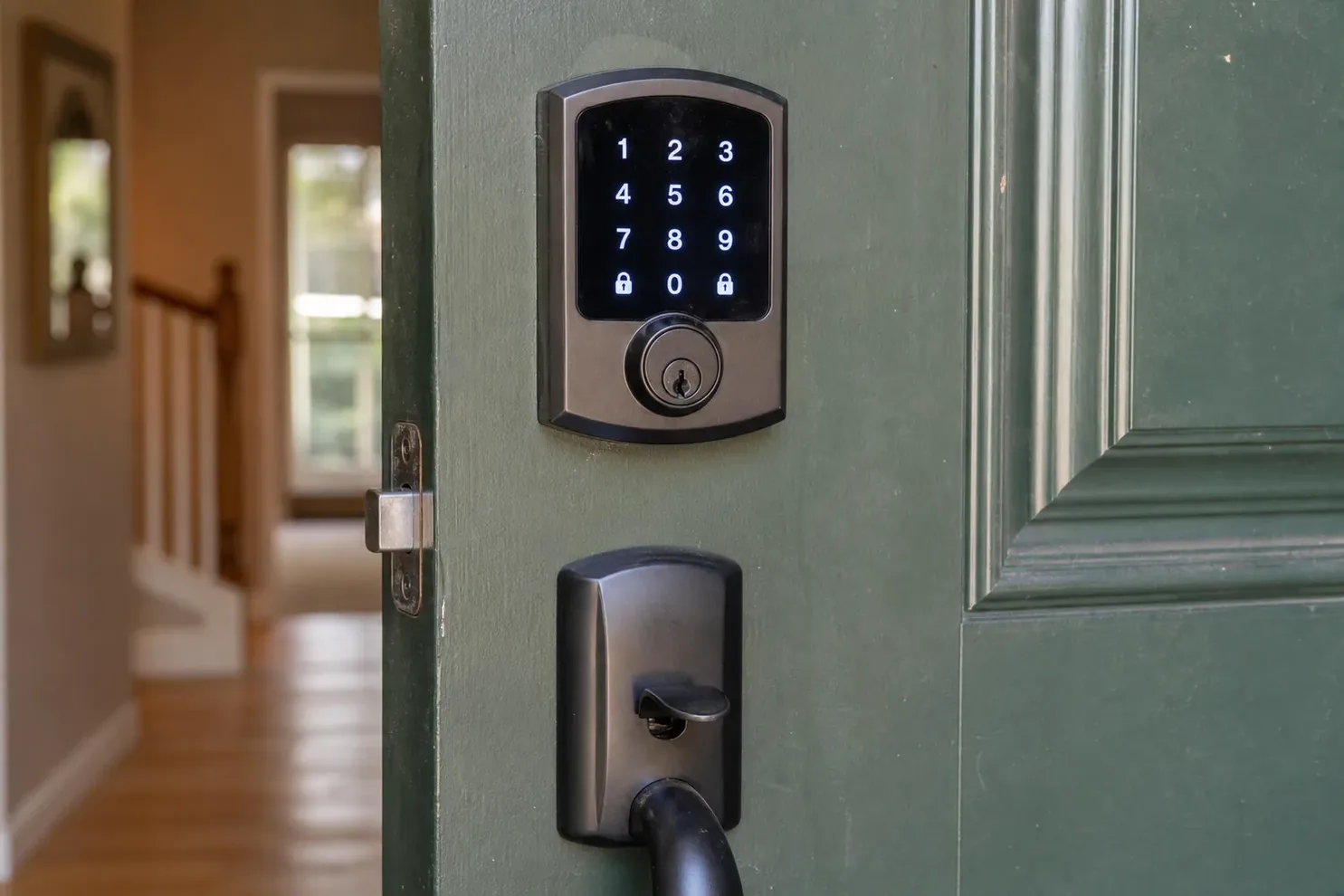
Electronics and finishes both take a beating near the water. A keypad that is sealed against weather and a body with an outdoor-rated finish last far longer on a bayside door than a lock made for a sheltered entry, and that choice is worth making at the start rather than after the first summer.
There are three broad kinds. A plain keypad deadbolt holds its codes at the door and never touches the internet. Bluetooth models let a phone act as the key when it is standing close by. Wi-Fi models, or Bluetooth locks with a small bridge inside the house, can be checked and opened from anywhere, which is what most owners of a rental want.
Many smart locks let a code work only between set dates, so a guest's code starts at check-in and dies at check-out without anyone remembering to delete it. Cleaners can get a code that works on changeover days, and the property manager keeps one that always works.
The lock also keeps a history of which code opened the door and when. For an owner who lives two hours away, that list answers most questions about who was at the house before anyone has to drive down.
Off-season, plenty of houses on the barrier island and along the bay stay shuttered for months. A connected lock lets the owner see that the door is locked, open it for a contractor, and get an alert if anyone uses a code they should not have.
Cold weather drains batteries faster, so a house that sits closed from October to April is worth a battery change before the season starts. Most locks warn well before the batteries quit, and nearly all of them keep a key cylinder as a backup.
One trip covers most houses, whether it's one door or the front, side and garage entry together.
Which door, what lock is on it now, and whether the house is rented, lived in, or both.
Bolt alignment, the strike, the door's thickness and the condition of the frame.
The lock goes in, the bolt is adjusted until it slides freely, and the old hardware leaves with the technician.
Owner and manager codes are set, the app is paired, and the backup key is tried before the technician goes.
Shore doors swell in humid weather, shift on raised houses, and take wind-driven rain. A bolt that has to be forced into the frame makes a motorized lock work harder every time, which empties the batteries early and eventually shows up as a jam error.
So the strike is set so the bolt has room to move in August as well as February, and a sagging door is brought back into line before the new lock goes on. That work is part of the estimate, not a surprise afterwards.
The front door gets the attention, but in a lot of shore houses the door people actually use is the one in from the garage or the side door off the driveway, where the cooler and the beach chairs come in. That is often the best place for the keypad, with the other doors rekeyed so a single key covers the rest of the house.
Putting the keypad where the traffic is means guests stop leaving that door unlocked because the key is buried in a bag, and the front door can stay locked all week without anyone noticing.
In the adult communities around town, a keypad on the front door makes life easier for the people who help out: aides, family and neighbors can each have a code instead of a copied key. Large, backlit buttons are easier to read than a key slot on a dark porch.
In condos, your unit door is yours to change; the lobby, the gate and any common doors belong to the association, so it's worth checking their rules before the visit. Share the gatehouse process when you call and the technician will have it in hand on arrival.
A model with a sealed keypad and an outdoor-rated finish holds up far better than one made for a sheltered door. The technician points out which kind suits your door before anything is installed.
On many smart locks, yes. Codes can be scheduled to start at check-in and stop at check-out, so nothing needs to be deleted by hand.
Only if you want to check or open the lock from somewhere else. Plain keypad locks and most Bluetooth locks work without any internet connection.
Most locks warn for weeks before the batteries run out, and nearly all of them keep a key cylinder you can still use. If you're stuck outside, call and it's handled as a lockout.
Yes. The door is bored for a deadbolt and a strike is set in the frame, and the free estimate tells you that before the work starts.
Yes. Every person can have a separate code, and the owner can remove any one of them without changing the others.
Connected models can send an alert when the door unlocks or stays unlocked, and many keypad locks can be set to lock themselves a short while after the door closes. That setting alone ends most of the worry about guests who forget.
Almost always. Keep that key with you or with someone nearby, not inside the house.
Yes. You hear what the door needs and the free estimate comes before any work begins.
Tell us your street and we send a tech.